

When you visit a new dentist, one of the first things you may be asked to complete is a medical history form. For some patients, this may feel unrelated to their teeth. After all, if you are scheduling a cleaning, dental exam, filling, or crown, why does your dentist need to know about your medications, allergies, surgeries, or health conditions?
The answer is simple: your oral health is connected to your overall health.
At Spokane Family Dental, we ask about medical history because it helps us provide safer, more personalized care. Whether you are scheduling your first appointment in Spokane Valley or returning for routine preventive care, your health background gives your dental team important information that can affect treatment recommendations, comfort, and safety.
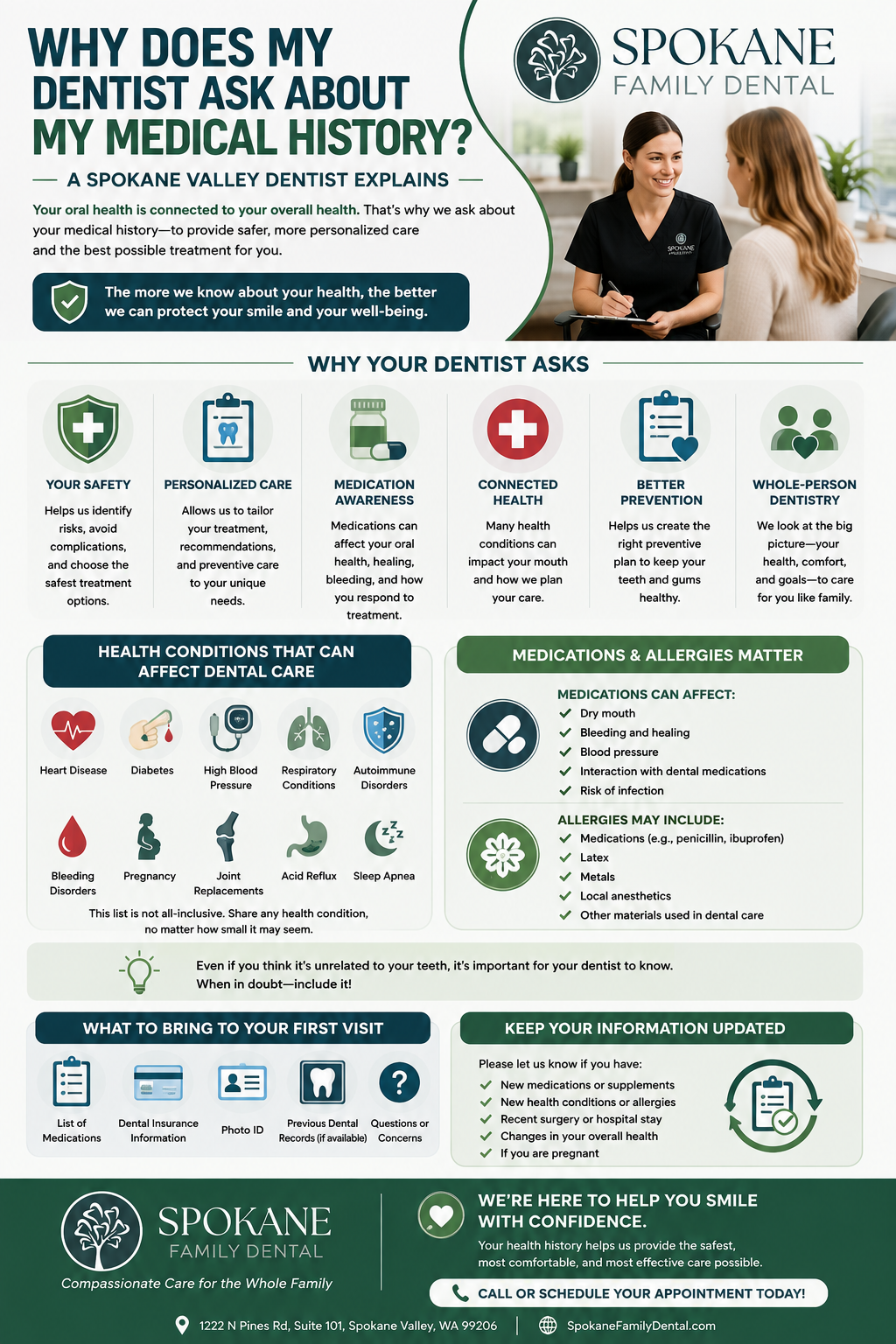
Your Mouth Is Connected to the Rest of Your Body
Dental care does not happen in isolation. Your teeth, gums, jaw, soft tissues, immune system, medications, and overall health all work together.
Certain medical conditions can affect your mouth. At the same time, oral health concerns can sometimes provide clues about broader health issues. For example, gum inflammation, dry mouth, oral sores, bleeding, and delayed healing may all be influenced by factors outside of brushing and flossing alone.
This is why your dentist wants a full picture of your health before recommending treatment. The more your dental team understands, the better they can tailor care to your needs.
Why Your Dentist Asks About Medications
Medications can have a direct impact on your oral health and dental treatment.
Some medications may cause dry mouth, which can increase the risk of cavities and gum irritation. Others may affect bleeding, healing, or how your body responds during dental procedures. Certain prescriptions, supplements, or over-the-counter medications may also influence which treatments are recommended or how appointments are planned.
Your dentist may ask about:
Prescription medications
Over-the-counter medications
Supplements
Blood thinners
Heart medications
Diabetes medications
Allergy medications
Medications that cause dry mouth
Recent medication changes
Even if a medication does not seem related to your teeth, it is important to include it on your health history form. This helps your dentist make informed decisions and avoid unnecessary risks.
Why Allergies Matter in Dentistry
Allergies are another important part of your medical history.
Your dental team may need to know if you have allergies or sensitivities to medications, latex, metals, anesthetics, antibiotics, or other materials commonly used in a dental office. Sharing this information helps the team choose safer options for your care.
If you have had a past reaction during dental treatment, even if you are not sure what caused it, let your dentist know. Your dental team can review your history and take extra precautions when planning treatment.
Health Conditions That Can Affect Dental Care
Many health conditions can influence your dental treatment plan. This does not mean you cannot receive dental care. It simply means your dentist may need to adjust your care, ask additional questions, or coordinate recommendations more carefully.
Common health topics your dentist may ask about include:
Diabetes
Heart conditions
High blood pressure
Autoimmune conditions
Bleeding disorders
Pregnancy
Cancer treatment history
Joint replacements
Sleep apnea
Acid reflux
Osteoporosis medications
Smoking or tobacco use
Past surgeries
Anxiety or dental fear
For example, a patient with diabetes may be more prone to gum inflammation or slower healing. A patient taking certain medications may experience dry mouth. A patient with a history of heart concerns may require extra attention when planning certain procedures.
These details help your dentist provide care that is appropriate for your individual health needs.
Why Your Dentist Asks About Previous Dental Experiences
Medical history is not limited to physical health conditions. Your dental history also matters.
If you have had a difficult experience with a dentist in the past, your current dental team should know. Dental anxiety, sensitivity, jaw discomfort, trouble getting numb, or fear of certain procedures can all affect how your appointment is approached.
At Spokane Family Dental, patient comfort is an important part of the care experience. When your dental team understands your concerns, they can explain each step, move at a comfortable pace, and help you feel more informed during your visit.
Medical History Helps With Preventive Dental Care
Your health history also helps your dentist recommend the right preventive care.
Preventive dentistry is not one-size-fits-all. Some patients need routine cleanings every six months. Others may need more frequent visits due to gum disease risk, dry mouth, frequent cavities, medical conditions, or other concerns.
During a dental exam, your dentist may evaluate your teeth, gums, soft tissues, bite, restorations, and overall oral health. Your medical history helps explain what your dental team is seeing and what steps may help protect your smile moving forward.
For example, if you are taking medication that causes dry mouth, your dentist may recommend specific home care strategies. If you have gum inflammation and a condition that affects healing, your dentist may suggest a more proactive maintenance schedule.
Why Medical History Matters Before Restorative Treatment
If you need restorative dental care, such as a filling, crown, bridge, extraction, or emergency appointment, your medical history becomes even more important.
Before treatment, your dentist needs to understand whether there are any health factors that could affect numbing, bleeding, healing, medication recommendations, or appointment planning.
This does not mean treatment will be complicated. In many cases, it simply helps your dentist prepare properly and provide care with your full health picture in mind.
Patients who are experiencing tooth pain, broken teeth, or dental infections should still provide updated medical information, even during urgent visits. This allows the dental team to make safe and informed recommendations.
Why Your Medical History Should Be Updated Regularly
Your health can change over time. New medications, recent surgeries, updated diagnoses, pregnancy, allergies, and changes in overall wellness can all affect dental care.
That is why your dental office may ask you to update your medical history periodically. Even if you have been a patient for years, your dental team needs current information to provide the best care possible.
You should let your dentist know if you have:
Started or stopped a medication
Had surgery
Developed a new health condition
Experienced a new allergy or reaction
Become pregnant
Had a recent hospitalization
Started treatment with a medical specialist
Noticed changes in your mouth or gums
Keeping your information updated helps your dental team continue caring for you safely and effectively.
What Should You Bring to a New Dental Appointment?
If you are visiting a new dentist in Spokane Valley, it can be helpful to bring a few key items to your first appointment.
Bring a current list of medications, including dosage if possible. You should also bring your dental insurance information, photo ID, any recent dental records if available, and a list of questions or concerns you want to discuss.
If you have a complex medical history, it may also be helpful to bring the names of your current medical providers. This can be useful if your dentist needs additional information before certain types of treatment.
Choosing a Dentist Who Looks at the Whole Picture
A quality dental visit should include more than a quick look at your teeth. Your dentist should take time to understand your goals, concerns, health background, and treatment needs.
Spokane Family Dental serves patients throughout Spokane Valley and the surrounding Spokane area with personalized dental care for the whole family. Whether you are scheduling a first visit, routine cleaning, restorative treatment, or emergency care, our team uses your health history to help guide thoughtful recommendations.
By understanding your full health picture, we can better support your smile, comfort, and long-term wellness.
Schedule Your Next Dental Visit in Spokane Valley
If you are looking for a Spokane Valley dentist who takes time to understand your needs, Spokane Family Dental is here to help. From new patient exams to preventive cleanings and restorative care, our team provides personalized dentistry designed around your health and comfort.
When you schedule your next appointment, come prepared with your medical history, medication list, and any questions you would like to ask. The more we know about your health, the better we can care for your smile.
Frequently Asked Dental Medical History
-
Your medications may affect your oral health, bleeding, healing, dry mouth, or treatment planning. Sharing a full medication list helps your dentist provide safer and more personalized care.
-
You should tell your dentist about any major health conditions, including diabetes, heart disease, high blood pressure, autoimmune conditions, bleeding disorders, pregnancy, cancer treatment history, joint replacements, and any condition that affects healing or immune health.
-
You may not need to complete a full new form every visit, but you should update your dentist whenever your health changes. New medications, surgeries, allergies, diagnoses, or hospitalizations can all affect dental care.
-
Yes. Your medical history may influence appointment timing, preventive care recommendations, medication considerations, anesthesia decisions, and follow-up care. This helps your dentist recommend treatment that fits your overall health needs.
