

How Do I Know If I Need a Root Canal? A Spokane Valley Dentist Explains
Tooth pain can be difficult to ignore. Sometimes it feels sharp and sudden. Other times it becomes a deep, lingering ache that makes it hard to chew, sleep, or focus during the day. When pain becomes severe or persistent, many patients start wondering the same thing: do I need a root canal?
A root canal may sound intimidating, but the purpose of the treatment is simple. Root canal therapy is designed to remove infection or inflammation from inside the tooth, relieve discomfort, and help save the natural tooth whenever possible.
At Spokane Family Dental, we help patients throughout Spokane Valley and the greater Spokane area understand their symptoms, explore their options, and receive comfortable dental care when tooth pain cannot wait.
What Is a Root Canal?
A root canal is a dental procedure used to treat the inside of a tooth. Inside each tooth is soft tissue called pulp. This pulp contains nerves, blood vessels, and connective tissue. When the pulp becomes inflamed or infected, it can cause significant pain and may threaten the health of the tooth.
During a root canal, the infected or damaged tissue is removed from inside the tooth. The inner canals are cleaned, disinfected, and sealed. In many cases, a dental crown is placed afterward to strengthen and protect the tooth.
The goal of a root canal is not to remove the tooth. The goal is to save it.
Why Would Someone Need a Root Canal?
Root canals are usually recommended when decay, damage, or infection reaches the inner part of the tooth. This can happen for several reasons.
A deep cavity may progress through the outer layers of the tooth and reach the nerve. A cracked or broken tooth can allow bacteria to enter the inner chamber. A tooth injury may damage the pulp even if the outside of the tooth still looks normal. In some cases, repeated dental procedures on the same tooth can also irritate or weaken the inner tissue.
Once the pulp becomes infected or inflamed, it usually cannot heal on its own. Without treatment, the infection may spread, pain may worsen, and the tooth may eventually need to be removed.
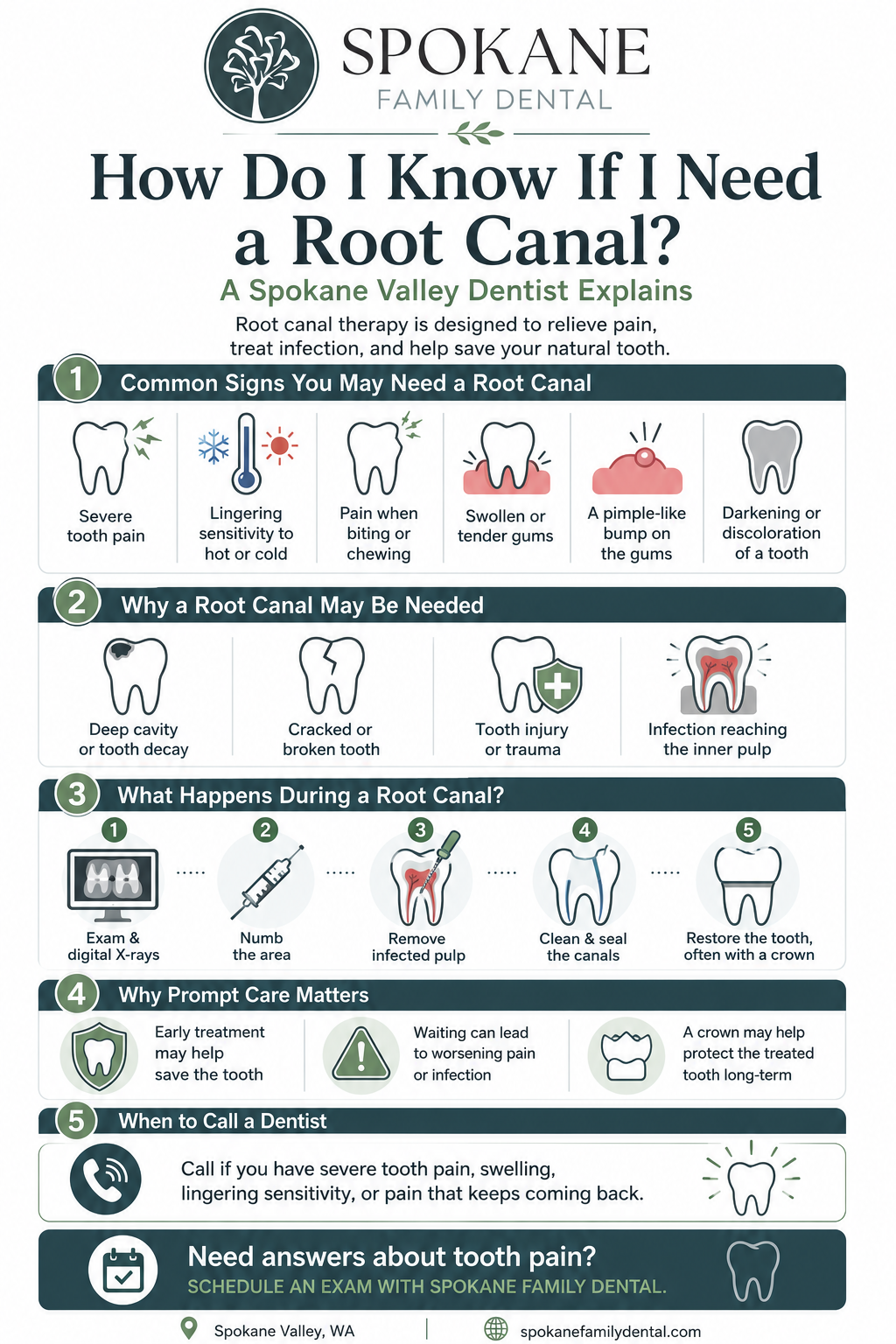
Common Signs You May Need a Root Canal
Not every toothache means you need a root canal. However, certain symptoms may suggest that the inside of the tooth has been affected.
You may need a root canal if you notice:
Severe tooth pain
Pain that lingers after hot or cold foods
Pain when biting or chewing
Swollen or tender gums near one tooth
A pimple-like bump on the gums
Darkening or discoloration of a tooth
A cracked or broken tooth
Deep decay or a large cavity
Pain that wakes you up at night
A bad taste or drainage near the tooth
These symptoms should not be ignored. Even if the pain comes and goes, the underlying issue may still be present.
Tooth Sensitivity vs. Root Canal Pain
Tooth sensitivity is common and does not always mean you need major dental treatment. Some patients feel sensitivity when drinking something cold, eating sweets, brushing near the gumline, or whitening their teeth.
Root canal-related pain is often different. It may be more intense, last longer, or feel deeper within the tooth. Pain that lingers after temperature changes, hurts when biting, or is paired with swelling should be evaluated by a dentist.
If you are unsure whether your symptoms are normal sensitivity or something more serious, scheduling an exam is the safest next step.
Can a Tooth Infection Go Away on Its Own?
A true tooth infection does not usually go away on its own. Pain may temporarily improve, but that does not always mean the infection has resolved. In some cases, pain decreases because the nerve inside the tooth has become damaged, while the infection remains active.
This can be dangerous because the infection may continue spreading to the surrounding bone, gums, or other areas. Waiting too long can make treatment more complicated and may reduce the chances of saving the tooth.
If you suspect a tooth infection, call your dentist as soon as possible.
What Happens During a Root Canal?
Many patients feel anxious about root canals because they are not sure what to expect. Modern root canal therapy is designed to be comfortable, precise, and focused on relieving pain rather than causing it.
A typical root canal process may include:
1. Exam and Digital X-Rays
Your dentist will evaluate the painful tooth, review your symptoms, and take X-rays if needed. This helps determine whether the pulp is infected or inflamed and whether a root canal is the right treatment.
2. Numbing the Area
The area around the tooth is numbed so you can remain comfortable during treatment. If you have dental anxiety, let your dental team know before the procedure begins.
3. Removing the Infected Tissue
Your dentist creates a small opening in the tooth and removes the damaged pulp from the inner chamber and canals.
4. Cleaning and Sealing the Tooth
The canals are cleaned, disinfected, shaped, and filled with a biocompatible material to help prevent reinfection.
5. Restoring the Tooth
After a root canal, the tooth may need a dental crown to protect it from fracture and restore chewing function. This is especially common for back teeth that handle more biting pressure.
Does a Root Canal Hurt?
One of the most common myths about root canals is that they are extremely painful. In reality, root canal treatment is meant to relieve pain caused by infection or inflammation.
With modern dental techniques and local anesthetic, many patients compare the experience to getting a routine filling. You may feel pressure or vibration during the appointment, but the area should be numb.
After treatment, it is normal to have some soreness as the area heals. Your dentist will explain what to expect and how to care for the tooth after your visit.
Root Canal or Extraction: Which Is Better?
If a tooth is infected or severely damaged, some patients wonder whether it should be removed instead of treated with a root canal.
In many cases, saving the natural tooth is preferred when possible. Keeping your natural tooth helps maintain chewing function, bite alignment, and jaw support. A root canal may allow you to preserve the tooth rather than replace it.
However, not every tooth can be saved. If a tooth is fractured beyond repair, has severe bone loss, or cannot be restored predictably, an extraction may be recommended. If a tooth does need to be removed, your dentist can discuss replacement options such as a dental implant, bridge, or denture.
The best choice depends on the condition of the tooth and your long-term oral health goals.
Why a Crown May Be Needed After a Root Canal
After root canal therapy, the treated tooth may be more vulnerable to cracking, especially if it had a large cavity, old filling, or significant damage before treatment. A dental crown helps cover and protect the remaining tooth structure.
A crown restores strength, shape, and function so you can chew more comfortably. It also helps reduce the risk of future fracture.
Your dentist will let you know whether a crown is needed based on the location and condition of the tooth.
When Should You Call a Dentist?
You should call a dentist if tooth pain is severe, persistent, worsening, or paired with swelling. You should also schedule an evaluation if pain returns repeatedly, if a tooth feels sensitive long after hot or cold foods, or if you notice a bump on the gums.
Dental pain is easier to treat when the cause is found early. Waiting until the pain becomes unbearable may limit your treatment options and increase the risk of needing emergency dental care.
Choosing a Root Canal Dentist in Spokane Valley
If you are experiencing tooth pain, you deserve clear answers and compassionate care. Spokane Family Dental provides root canal treatment for patients in Spokane Valley and surrounding communities who want to relieve pain, treat infection, and preserve their natural teeth whenever possible.
Our team focuses on comfort, communication, and personalized treatment planning. Whether you need a root canal, dental crown, emergency dental appointment, or another restorative solution, we can help you understand the next step.
Schedule Root Canal Care in Spokane Valley
Severe tooth pain is not something to push through. If you think you may need a root canal, scheduling an exam can help identify the cause of your symptoms and determine the best treatment option.
Spokane Family Dental is here to help patients throughout Spokane Valley protect their smiles with gentle, comprehensive dental care.
Frequently Asked Dentist Questions
-
You may need a root canal if you have severe tooth pain, lingering sensitivity to hot or cold, pain when biting, gum swelling, a pimple-like bump on the gums, or a darkened tooth. A dental exam and X-rays can confirm whether the inside of the tooth is infected or inflamed.
-
Antibiotics may help manage infection symptoms in some cases, but they usually do not remove the source of infection inside the tooth. If the pulp is infected, a root canal or extraction may be needed to fully address the problem.
-
When a tooth can be saved, a root canal is often preferred because it preserves the natural tooth. If the tooth is too damaged to restore, an extraction may be necessary. Your dentist can explain which option is best after evaluating the tooth.
-
With proper care, a tooth treated with a root canal can last many years and sometimes a lifetime. Good oral hygiene, routine dental checkups, and a protective crown when needed can help support long-term success.
