

Why Are My Gums Bleeding When I Brush? A Spokane Valley Dentist Explains
Seeing blood when you brush or floss can be concerning. Some people assume bleeding gums are normal, especially if they have brushed too hard or skipped flossing for a while. While occasional irritation can happen, gums that bleed regularly should not be ignored.
Bleeding gums are often a sign that the gum tissue is inflamed. In many cases, this inflammation is connected to plaque buildup, tartar, gingivitis, or gum disease. The good news is that when gum concerns are caught early, they can often be managed with better home care, professional cleanings, and personalized dental treatment.
At Spokane Family Dental, we help patients throughout Spokane Valley and the surrounding Spokane area understand what their symptoms may mean and how to protect their long-term oral health.
Are Bleeding Gums Normal?
Healthy gums should not bleed easily. If your gums bleed every time you brush or floss, that is usually a sign that something needs attention.
Bleeding can happen when plaque collects along the gumline. Plaque contains bacteria that can irritate the gums and cause inflammation. When inflammation develops, the gum tissue may become tender, swollen, red, or more likely to bleed.
Some patients notice bleeding only when flossing. Others may see blood after brushing, eating certain foods, or using a toothpick. Even if the bleeding is mild, it is worth discussing with your dentist if it happens consistently.

Common Reasons Gums Bleed
There are several reasons your gums may bleed. Some are temporary, while others may point to a more serious gum health issue.
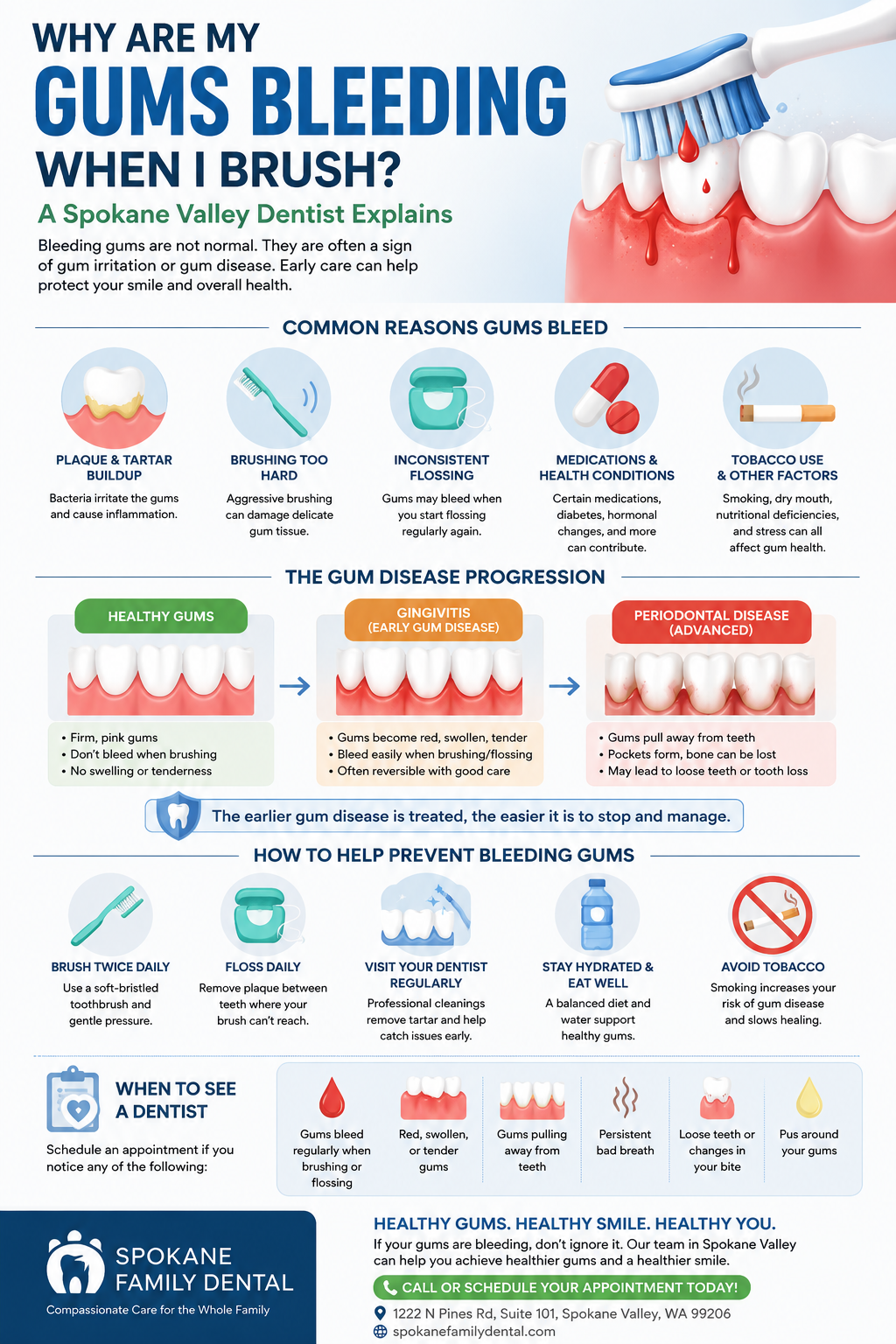
One common cause is plaque and tartar buildup. Plaque can be removed with regular brushing and flossing, but tartar is hardened buildup that requires a professional cleaning. When tartar sits along or below the gumline, it can continue irritating the gums.
Another common cause is inconsistent flossing. If you have not flossed regularly, your gums may bleed when you restart. This can improve as your gums become healthier, but bleeding that continues should be checked by a dental professional.
Brushing too aggressively can also irritate the gums. Using a hard-bristled toothbrush or scrubbing with too much pressure may damage delicate gum tissue. Switching to a soft-bristled toothbrush and using gentle circular motions can help.
Bleeding gums may also be connected to gum disease, certain medications, hormonal changes, tobacco use, diabetes, dry mouth, or nutritional concerns. Because there are multiple possible causes, a dental exam is the best way to understand what is happening.
Bleeding Gums and Gingivitis
Gingivitis is the earliest stage of gum disease. It happens when plaque buildup causes inflammation in the gum tissue.
Common signs of gingivitis include bleeding gums, redness, swelling, tenderness, and bad breath. At this stage, gum disease may still be reversible with improved home care and professional dental cleanings.
This is why it is important not to wait until symptoms become painful. Many patients with early gum disease do not feel discomfort. Bleeding may be one of the first noticeable signs that the gums need attention.
If your dentist identifies gingivitis early, they may recommend a professional cleaning, better flossing habits, improved brushing technique, and a follow-up schedule to monitor your gum health.
When Bleeding Gums May Be a Sign of Gum Disease
If gum inflammation is not treated, it can progress into periodontal disease. Periodontal disease affects the tissues and bone that support your teeth.
As gum disease advances, patients may notice gums pulling away from the teeth, deeper spaces around the teeth, persistent bad breath, gum recession, loose teeth, or discomfort when chewing.
At this stage, treatment may require more than a standard cleaning. Your dentist may recommend scaling and root planing, periodontal maintenance, or other gum disease therapies designed to reduce bacteria and support healthier gums.
The sooner gum disease is addressed, the better chance you have of protecting your teeth, gums, and bone structure.
What Happens During a Gum Health Evaluation?
If you visit Spokane Family Dental for bleeding gums, your dental team will evaluate your teeth, gums, and overall oral health.
This may include reviewing your dental and medical history, checking for plaque and tartar buildup, measuring the spaces between your teeth and gums, evaluating gum inflammation, and taking digital X-rays if needed.
These measurements help your dentist understand whether your gums are healthy, showing early signs of gingivitis, or showing signs of more advanced periodontal disease.
From there, your dentist can explain what they are seeing and recommend the right next step.
How Professional Cleanings Help Bleeding Gums
Professional dental cleanings are one of the most important ways to improve gum health.
During a cleaning, your hygienist removes plaque and tartar from the teeth and around the gumline. This helps reduce the bacteria that contribute to gum inflammation. Your dental team can also polish your teeth and provide personalized recommendations for brushing, flossing, and maintaining healthier gums at home.
For patients with healthy gums, routine cleanings every six months may be enough. For patients with gum disease or a history of gum problems, more frequent periodontal maintenance may be recommended.
What Is a Deep Cleaning?
A deep cleaning, also called scaling and root planing, is different from a routine dental cleaning.
A regular cleaning is typically recommended when the gums are healthy or only mildly irritated. A deep cleaning is used when bacteria and tartar have built up below the gumline and gum disease is present.
During scaling and root planing, the dental team carefully removes buildup from beneath the gums and smooths the root surfaces of the teeth. This helps reduce bacterial irritation and gives the gum tissue a better chance to heal.
If your gums bleed often or your dentist finds deeper periodontal pockets, a deep cleaning may be recommended as part of your gum disease treatment plan.
Can Laser Gum Therapy Help?
Some patients with gum disease may benefit from laser gum therapy. Laser treatment can be used as part of periodontal care to target infected tissue, reduce bacteria, and support healing.
Laser gum therapy may be recommended depending on the severity of gum disease and the condition of the gum tissue. It is not needed for every patient with bleeding gums, but it can be a helpful option for certain cases.
Your dentist can determine whether laser therapy, deep cleaning, periodontal maintenance, or another approach is right for you.
How to Help Prevent Bleeding Gums at Home
Daily habits play a major role in gum health. If your gums are bleeding, improving your home care routine may help reduce inflammation over time.
Brush twice a day with a soft-bristled toothbrush. Use gentle pressure rather than scrubbing aggressively. Floss daily to remove plaque between the teeth where your toothbrush cannot reach. An electric toothbrush or water flosser may also help some patients clean more effectively.
It is also helpful to limit sugary foods and drinks, stay hydrated, avoid tobacco products, and keep up with routine dental visits.
If your gums continue bleeding after improving your home care routine, schedule an appointment with your dentist.
When Should You See a Dentist for Bleeding Gums?
You should schedule a dental visit if your gums bleed regularly, feel swollen, look red, or feel tender. You should also contact your dentist if you notice gum recession, persistent bad breath, loose teeth, pain when chewing, or pus around the gums.
Bleeding gums are easier to address when the cause is found early. Waiting too long can allow gum disease to progress and may lead to more complex treatment later.
If you are unsure whether your symptoms are serious, it is always better to have your gums evaluated.
Choosing a Dentist for Gum Health in Spokane Valley
Gum health is an important part of your overall dental care. Whether you are dealing with occasional bleeding, early gingivitis, or signs of periodontal disease, working with a local Spokane Valley dentist can help you get answers and take the next step.
Spokane Family Dental provides preventive care, gum disease treatment, and laser gum therapy options for patients in Spokane Valley and surrounding communities. Their team can evaluate your symptoms, explain your options, and create a personalized plan to help protect your smile.
Schedule a Gum Health Evaluation in Spokane Valley
Bleeding gums are common, but they are not something to ignore. If you see blood when brushing or flossing, your gums may be telling you they need attention.
Spokane Family Dental helps patients throughout Spokane Valley maintain healthier teeth and gums through preventive cleanings, periodontal care, and personalized treatment recommendations. If your gums are bleeding, schedule an appointment and take the next step toward a healthier smile.
Frequently Asked Dentist Questions
-
Your gums may bleed because of plaque buildup, tartar, gum inflammation, brushing too hard, or early gum disease. If bleeding happens regularly, it is best to schedule a dental exam to identify the cause.
-
Bleeding caused by minor irritation may improve with better brushing and flossing habits. However, bleeding that continues may be a sign of gingivitis or gum disease and should be evaluated by a dentist.
-
Bleeding gums can be an early sign of gum disease, especially when paired with redness, swelling, tenderness, bad breath, or gum recession. Early treatment can help prevent the condition from getting worse.
-
Treatment depends on the cause. Some patients need a routine cleaning and better home care, while others may need deep cleaning, periodontal maintenance, or gum disease therapy. Your dentist can recommend the right option after evaluating your gums.
