

Do I Need a Filling or a Crown? A Spokane Valley Dentist Explains
Tooth decay, cracks, chips, and worn enamel are common dental concerns. The good news is that many of these issues can be repaired with restorative dental care. The question many patients have is simple: do I need a filling or a crown?
The answer depends on how much of the tooth is damaged, where the problem is located, and how strong the remaining tooth structure is. A smaller cavity may only need a dental filling, while a larger area of decay or damage may need the added protection of a dental crown.
At Spokane Family Dental, we help patients throughout Spokane Valley and the greater Spokane area understand their treatment options clearly. If you are experiencing tooth sensitivity, pain, a chipped tooth, or a broken filling, an exam can help determine the best way to restore your smile.
What Is a Dental Filling?
A dental filling is used to repair a small to moderate area of tooth decay or minor damage. When a cavity forms, the decayed portion of the tooth is removed and the area is filled with a durable material to restore the tooth’s shape and function.
Fillings are commonly recommended for small cavities, minor chips, worn areas, or teeth with limited damage. They help protect the tooth from further decay while allowing you to bite and chew more comfortably.
Many patients prefer tooth-colored, metal-free fillings because they blend in naturally with the surrounding teeth. This can be especially helpful for visible areas of the smile.
What Is a Dental Crown?
A dental crown is a custom restoration that covers the visible portion of a tooth. Crowns are often recommended when a tooth needs more support than a filling can provide.
A crown may be used when a tooth has a large cavity, a significant crack, a large old filling, or damage that weakens the tooth. Because the crown covers and protects the tooth, it can help restore strength, shape, function, and appearance.
Crowns may also be recommended after certain dental procedures, including root canal treatment, or as part of a larger restorative plan involving bridges or dental implants.
How Dentists Decide Between a Filling and a Crown
The main difference between a filling and a crown comes down to how much healthy tooth structure remains.
If the damaged area is small and the tooth is still strong, a filling may be enough. If the tooth has lost a significant amount of structure, a crown may be the better long-term option.
Your dentist may consider several factors during the exam, including the size of the cavity, the location of the damage, whether the tooth is cracked, how much pressure the tooth handles when chewing, and whether there are existing fillings or restorations.
Back teeth often handle more chewing force than front teeth. Because of this, larger damage on molars may require stronger protection than a small area on a front tooth.
Signs You May Need a Dental Filling
A dental filling may be recommended when the issue is caught early. Many cavities begin small and may not cause much discomfort at first.
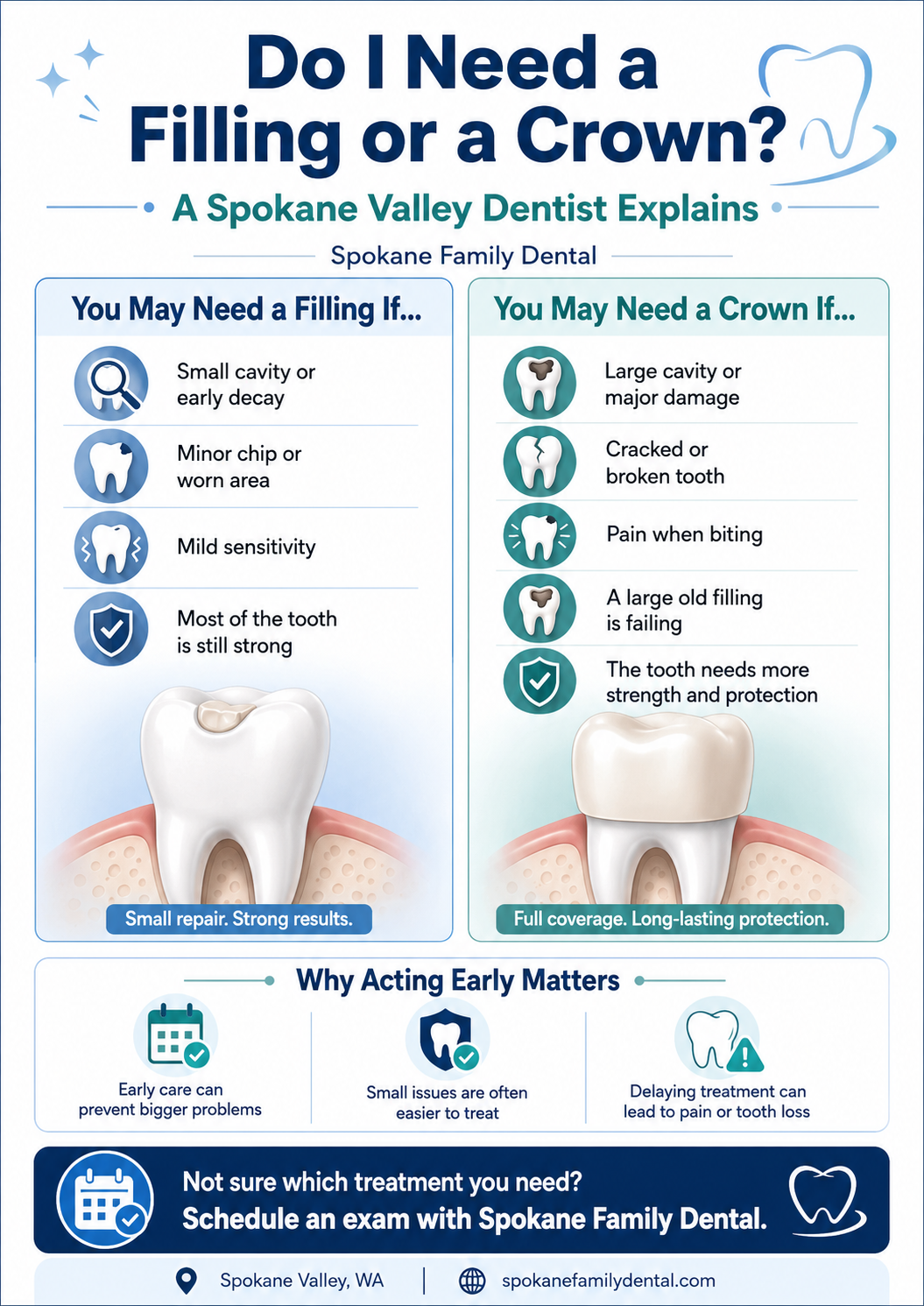
You may need a filling if you notice mild tooth sensitivity, a small dark spot on the tooth, discomfort when eating sweets, food getting stuck in one area, or a rough edge on the tooth.
However, not every cavity causes obvious symptoms. That is why routine dental exams and cleanings are important. Your dentist can often find decay before it becomes painful or requires more extensive treatment.
Signs You May Need a Dental Crown
A dental crown may be needed when a tooth is too damaged or weakened for a filling alone.
You may need a crown if you have a cracked tooth, a broken tooth, a large filling that is failing, significant decay, pain when biting down, or a tooth that has become weakened after treatment.
Crowns are also commonly used when a tooth has lost too much structure to hold a filling securely. In these situations, choosing a filling instead of a crown may not provide enough long-term support.
What Happens If You Wait Too Long?
Delaying treatment can allow a small dental issue to become a larger one. A cavity that may have needed a simple filling can grow deeper into the tooth. A small crack can spread. A weakened tooth can break under normal chewing pressure.
When dental concerns are treated early, care is often simpler and more conservative. Waiting too long may increase the chance of needing a crown, root canal, extraction, or emergency dental care.
If you are unsure whether a tooth needs attention, it is better to schedule an exam than wait for the problem to become painful.
Are Fillings and Crowns Painful?
Many patients feel nervous about restorative dental care, especially if they have had uncomfortable dental experiences in the past. Modern dental care is designed to be more comfortable, precise, and patient-focused.
During a filling or crown appointment, your dental team will help keep the area numb and comfortable. You may feel pressure or vibration, but the goal is to make treatment as smooth as possible.
If dental anxiety is a concern, let your dentist know before treatment begins. A supportive dental team can explain each step, answer questions, and help you feel more comfortable throughout your visit.
Why Metal-Free Restorations Matter
Metal-free fillings and crowns are designed to restore the tooth while maintaining a natural-looking smile. For many patients, this is important because they want dental work that blends in rather than stands out.
Tooth-colored restorations can be used to repair decay, chips, cracks, and worn areas while supporting both function and appearance. This makes them a strong option for patients who want restorative care that still looks natural.
Your dentist can explain which material is best based on the location of the tooth, the size of the restoration, and your long-term dental needs.
Choosing a Restorative Dentist in Spokane Valley
If you are dealing with tooth sensitivity, decay, a cracked tooth, or an old filling that needs attention, choosing a local Spokane Valley dentist can help you get care sooner and stay consistent with follow-up treatment.
Spokane Family Dental provides restorative dental care for patients throughout Spokane Valley and the surrounding Spokane area. Whether you need a metal-free filling, dental crown, bridge, or help with a dental emergency, their team can evaluate your smile and recommend the right next step.
The goal is not just to repair the tooth. The goal is to restore comfort, function, and confidence while helping protect your long-term oral health.
Schedule Restorative Dental Care in Spokane Valley
If you think you may need a filling or crown, do not wait until the tooth becomes more painful. Early treatment can help preserve more of your natural tooth and prevent the issue from becoming more serious.
Spokane Family Dental offers personalized restorative care in Spokane Valley for patients who need fillings, crowns, bridges, and other dental services designed to keep their smiles healthy and strong.
Frequently Asked Dentist Questions
-
A filling is often used for smaller cavities or minor damage, while a crown is usually recommended when a tooth has more significant decay, cracking, or weakened structure. The best way to know is to schedule an exam so your dentist can evaluate the tooth.
-
A crown is not always better than a filling. The right choice depends on the condition of the tooth. If the damage is small, a filling may be enough. If the tooth needs more support and protection, a crown may be the stronger long-term option.
-
Some small chips or minor cracks may be repaired with a filling or bonding material. Larger cracks, painful cracks, or cracks that weaken the tooth may require a crown or another restorative treatment.
-
If a cavity is ignored, it can grow deeper into the tooth and eventually cause pain, infection, or damage that requires more advanced treatment. Treating decay early often allows for simpler and more conservative care.
