

Use Your Dental Benefits Before They Reset at the End of the Year
As the end of the year approaches, many people start thinking about holidays, family gatherings, travel plans, and busy schedules. Dental care can easily get pushed aside during this season. However, if you have dental insurance, this is also one of the most important times of year to review your benefits and schedule any care you may still need.
Many dental insurance plans reset at the end of the plan year. That means unused benefits may not carry over into the new year. If you have already been paying for dental coverage, waiting too long could mean leaving available benefits unused.
At Spokane Family Dental, we help patients throughout Spokane Valley and the surrounding Spokane area make informed decisions about their dental care. Whether you are due for a routine cleaning, need a filling, have been putting off a crown, or want to understand your treatment options, scheduling before the end of the year may help you make the most of your current dental benefits.
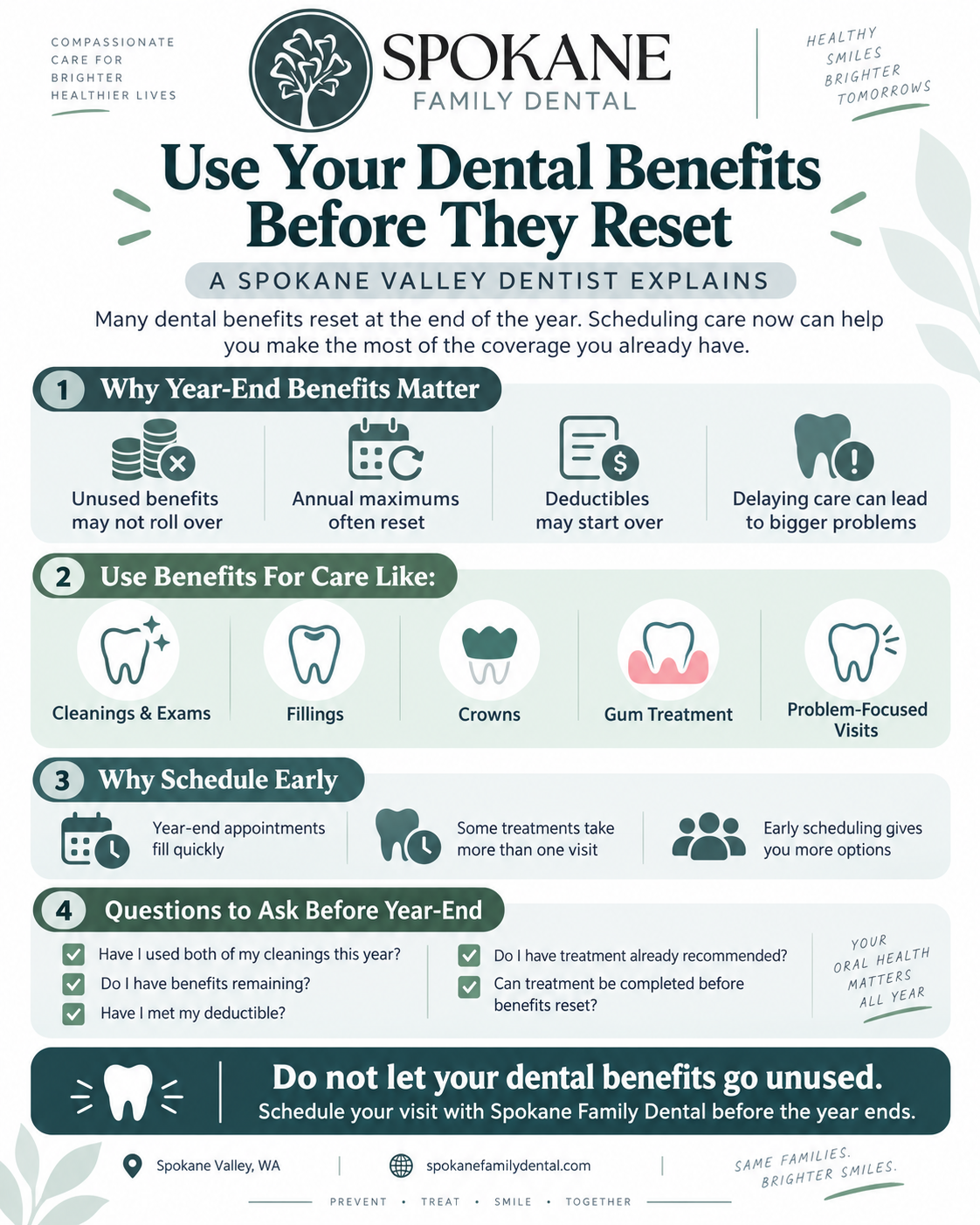
Why Year-End Dental Benefits Matter
Dental insurance benefits are usually designed to help patients maintain their oral health throughout the year. Depending on your plan, benefits may help cover preventive care, exams, cleanings, X-rays, fillings, crowns, periodontal care, or other necessary dental treatments.
The challenge is that many people do not use their full benefits before the year ends. Once a new plan year begins, annual maximums, deductibles, and covered benefits may reset. In many cases, unused benefits from the previous year do not roll over.
This is why the phrase “use it or lose it” is often used when talking about dental insurance. If you have benefits available now, it may be worth scheduling an appointment before the end of the year.
What Does It Mean When Dental Benefits Reset?
When dental benefits reset, your plan starts a new benefit period. For many patients, this happens on January 1, although some plans may follow a different schedule.
A reset may affect several parts of your coverage, including your annual maximum, deductible, preventive care allowance, treatment coverage, and remaining benefits for the current year.
For example, if you have already met your deductible or have remaining benefits available, completing recommended treatment before the reset may be more cost-effective than waiting until the new year. Once the new year begins, you may need to meet a deductible again before certain coverage applies.
Because every insurance plan is different, it is important to confirm your specific benefits before making treatment decisions.
Preventive Care Is a Smart Place to Start
If you are unsure where to begin, start with preventive dental care.
Routine cleanings and exams are some of the most common dental benefits patients have available. These visits help your dentist monitor your teeth, gums, bite, and overall oral health. They also give your dental team the opportunity to catch small issues before they turn into more serious problems.
Preventive visits may include:
Professional dental cleaning
Comprehensive dental exam
Digital X-rays when needed
Gum health evaluation
Oral cancer screening
Personalized home care recommendations
If you have not had two cleanings this year, or if it has been more than six months since your last visit, now may be a good time to schedule your next appointment.
Do Not Wait on Recommended Dental Treatment
Year-end is also a good time to complete dental treatment that has already been recommended.
Many patients delay treatment because life gets busy or because a tooth does not hurt yet. Unfortunately, dental problems often become more serious when they are left untreated. A small cavity can grow deeper. A cracked tooth can worsen. A worn filling can fail. Gum inflammation can progress.
If your dentist has recommended treatment, such as a filling, crown, deep cleaning, or restorative procedure, using your current benefits before they reset may help you avoid larger problems and higher costs later.
The best dental care is proactive. Scheduling now can help protect your smile before minor concerns become urgent.
Common Treatments Patients Schedule Before Year-End
Every patient’s needs are different, but there are several common types of dental care people often schedule before their benefits reset.
Dental Cleanings and Exams
If you are due for preventive care, a cleaning and exam can help remove plaque and tartar, check for cavities, evaluate gum health, and keep your smile on track.
Fillings
Small cavities are typically easier to treat when caught early. If you have been told you need a filling, taking care of it before the end of the year may help prevent deeper decay.
Crowns
Dental crowns may be recommended for cracked, weakened, worn, or heavily restored teeth. If a crown has already been recommended, postponing care can increase the risk of the tooth breaking further.
Gum Disease Treatment
Bleeding gums, tartar buildup, and periodontal pockets may require more than a routine cleaning. Treating gum disease early can help protect the bone and tissues that support your teeth.
Emergency or Problem-Focused Visits
If you are dealing with tooth pain, sensitivity, a broken tooth, or a lost filling, do not wait until the holidays make scheduling more difficult. Dental pain should be evaluated before it becomes more serious.
Why Scheduling Early Matters
Dental offices often become busier near the end of the year. Patients are trying to use their benefits, families are working around school breaks, and holiday schedules can make appointment availability more limited.
Waiting until the final week of the year may make it harder to find a convenient appointment time. It can also make it difficult to complete multi-step treatment before your benefits reset.
Some dental treatments require more than one visit. For example, a crown may involve planning, preparation, and final placement. If you wait too long, there may not be enough time to complete treatment within the current benefit year.
Scheduling earlier gives your dental team more flexibility and gives you more time to understand your options.
How Spokane Family Dental Helps Patients Understand Their Options
Dental insurance can feel confusing. Patients often have questions about what is covered, what benefits remain, and how to prioritize treatment before the end of the year.
At Spokane Family Dental, our team helps patients understand their dental needs and make confident decisions about care. While coverage varies by plan, we can help review treatment recommendations, discuss timing, and answer questions about next steps.
If you are a new guest, bringing your insurance information to your appointment helps our team better understand your benefits and provide guidance based on your plan.
What If You Do Not Have Dental Insurance?
Even if you do not have dental insurance, the end of the year can still be a smart time to prioritize your oral health.
Dental problems do not wait for the perfect time. Delaying care can allow small issues to become more expensive and more uncomfortable. If you do not have insurance, ask about available payment options or in-house dental plan options that may help make care more manageable.
Preventive care is still one of the best investments you can make in your long-term oral health.
Questions to Ask Before the End of the Year
If you are unsure whether you should schedule an appointment before your benefits reset, consider asking your dental office a few questions.
You may want to ask:
Have I used both of my cleanings this year?
Do I have remaining dental benefits available?
Have I met my deductible?
Do I have recommended treatment that should be completed soon?
Can treatment be completed before the end of the year?
Are there appointment times available before holiday schedules fill up?
These questions can help you make a practical plan instead of waiting until your benefits reset.
Why Local Preventive Care Matters for Spokane Valley Families
Having a trusted local dentist makes it easier to stay consistent with care. When your dental office is nearby, scheduling cleanings, exams, follow-up visits, and restorative treatment becomes more convenient.
Spokane Family Dental serves patients throughout Spokane Valley and the surrounding Spokane area with personalized, comfort-focused dental care. Whether you are scheduling for yourself, your child, or your family, year-end is a good time to make sure your smiles are healthy going into the new year.
Routine care can help prevent cavities, monitor gum health, protect existing dental work, and give you peace of mind before the busy holiday season.
Schedule Before Your Dental Benefits Reset
If you have dental benefits remaining, now is the time to use them. Whether you need a routine cleaning, dental exam, filling, crown, gum evaluation, or another recommended treatment, scheduling before the end of the year can help you make the most of the coverage you already have.
Do not wait until appointment times are limited or your benefits reset. Contact Spokane Family Dental in Spokane Valley to schedule your visit and take the next step toward a healthier smile.
Frequently Asked Dental Benefits
-
Dental implants are often more stable and natural-feeling than traditional dentures, but they are not the right fit for every patient. Dentures may be more affordable upfront and can replace many teeth at once. The best choice depends on your oral health, budget, and goals.
-
In many cases, unused dental benefits do not roll over into the next year. If you have remaining benefits and delay care, you may lose access to benefits you already paid for through your premiums.
-
Common year-end appointments include dental cleanings, exams, X-rays, fillings, crowns, gum disease treatment, and follow-up care for previously recommended treatment. Your dentist can help you prioritize care based on urgency and available benefits.
-
Yes. Many dental problems begin without pain. Routine dental exams and cleanings can help identify cavities, gum disease, worn fillings, cracks, and other concerns before they become painful or more expensive to treat.
