

A small gap or uneven front tooth can make you notice your smile in every photo. But wanting a change does not automatically mean you need several veneers. Sometimes the right conversation starts with a much smaller adjustment.
Dental bonding and porcelain veneers can both change how teeth look, but they involve different materials, treatment steps, and maintenance decisions. Choosing between them means looking beyond the first photograph of the finished result.
Spokane Family Dental offers both options at its Spokane Valley office. If you are comparing cosmetic dental care in Spokane County, here is how to prepare for a consultation that focuses on your teeth, priorities, and comfort with long-term treatment.
Start with the change you actually want
Before choosing a procedure, describe the concern as specifically as possible. Is one tooth shorter than its neighbor? Does a small space bother you? Are you hoping to change the shape and color of several front teeth?
Those goals lead to different discussions. For example, a person who likes their smile except for one uneven edge may have different options from someone seeking a coordinated change across multiple teeth. These are examples of treatment goals, not promises that either person qualifies for a particular procedure.
Bring a short description of what bothers you and what you would prefer to keep. Saying “I want this edge to look more even, but I like the shape of my other teeth” gives your dentist more useful direction than asking for a completely new smile.
When dental bonding may fit the goal
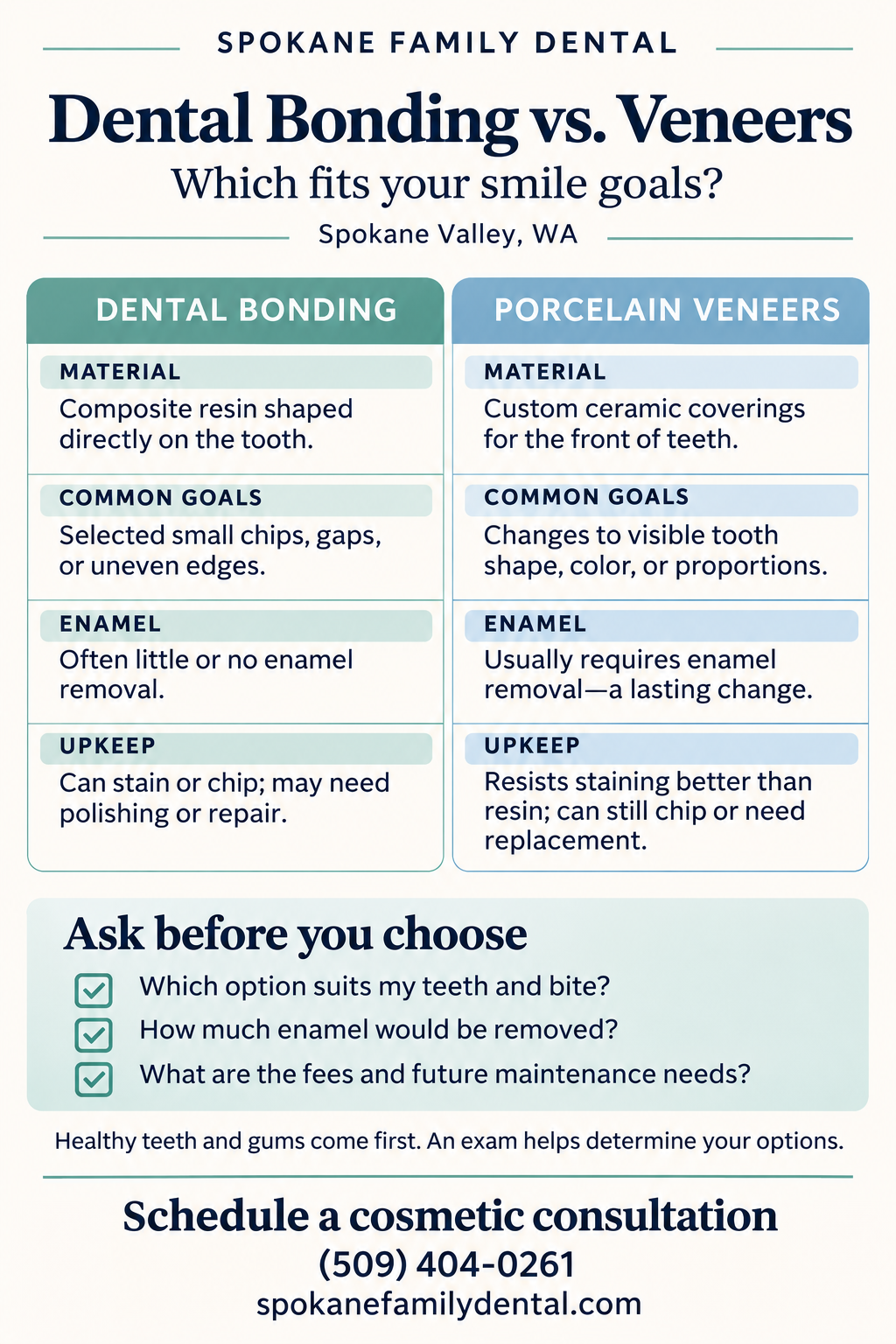
With tooth-colored dental bonding, a dentist applies composite resin directly to a tooth and shapes it before hardening and polishing it. It can address selected small chips, spaces, and shape concerns.
Bonding often requires little or no enamel removal, making it worth discussing when preserving tooth structure is a priority. It can frequently be completed in one visit, although your own appointment plan depends on the examination and the work needed.
The tradeoff is upkeep. Resin can stain or chip, and a bonded area may need polishing, repair, or replacement. Ask what maintenance would look like for the specific tooth you want changed, especially if its edge receives pressure when you bite.
Rather than assuming bonding is a temporary step toward veneers, ask whether it could reasonably meet your goal on its own. A smaller change can be a complete treatment plan when it suits the clinical situation.
When porcelain veneers may be worth discussing
Porcelain veneers are custom ceramic coverings attached to the front surfaces of teeth. They may be considered when a patient wants changes to visible tooth shape, color, or proportions.
Porcelain generally resists staining better than composite resin. However, veneer preparation usually removes enamel, so the decision involves a lasting change to the tooth. Veneers also can chip, loosen, or need replacement over time.
That makes a consultation about more than whether you like the appearance of porcelain. You should understand what will happen to each tooth, which alternatives are reasonable, and what future care may involve.
Ask your dentist to explain why a veneer is recommended for each proposed tooth. A recommendation involving several teeth should come with an explanation of how those teeth relate to your goals and bite.
Healthy teeth and a suitable bite come first
Cosmetic treatment should follow an assessment of the teeth and gums. Decay or gum disease may need attention before veneers are considered. Grinding, clenching, and the way teeth meet can also affect whether a cosmetic option is suitable.
If you have noticed a rough edge, tell the dentist when you first saw it and whether it has changed. A tooth that looks uneven needs an examination before anyone can say whether the issue is purely cosmetic.
Likewise, a concern about spacing or alignment deserves more than an assumption that adding material is the answer. Ask whether an orthodontic assessment would be useful. Spokane Family Dental also offers Invisalign treatment, which may be relevant to that discussion depending on your individual findings.
Compare the whole plan, including future care
The most useful comparison is between two proposed plans for your mouth, rather than two general descriptions online. Ask for the number of teeth involved, expected visits, estimated fees, and anticipated maintenance.
If keeping initial treatment limited is important, say so. If avoiding future repairs is your main concern, explain that too, while recognizing that no cosmetic restoration comes with a lifetime guarantee.
Discuss how you would handle a repair later. Would the dentist expect to polish, add material, replace a restoration, or reassess the tooth? You do not need a prediction of every future problem, but you should understand the responsibilities that come with treatment.
Before approving a plan, ask:
What is the least extensive option that could reasonably achieve my goal?
How much enamel would you expect to remove from each tooth?
What might prevent this treatment from working well for me?
What follow-up or replacement costs should I plan for?
Plan around your schedule without rushing the decision
If an upcoming event prompted your interest, share the date at your first appointment. Ask whether there is enough time for an examination, any necessary preliminary care, treatment, and follow-up.
For patients traveling from elsewhere in Spokane County, knowing the anticipated visit schedule also helps with work and transportation planning. Confirm the schedule with the office rather than assuming either option can be completed within a particular deadline.
Arrange a cosmetic consultation in Spokane Valley
You do not need to decide between bonding and veneers before making an appointment. Start with the concern you want evaluated and ask for an explanation of the suitable options.
Spokane Family Dental is located at 1222 N Pines Rd, Suite 101, Spokane Valley, WA 99206. Call (509) 404-0261 or request an appointment with Spokane Family Dental to discuss your smile goals and next steps.
Frequently Asked Questions
-
It may be appropriate for a localized concern. Ask the dentist how the shape, color, and bite would be evaluated before treating a single tooth.
-
No. A veneer covers the front surface of an existing tooth. It is different from replacing a missing tooth or placing a crown around a tooth.
-
There is no universal number. Ask why each tooth is included in a proposed plan and whether a more limited approach would meet your priorities.
-
Ask which findings are elective cosmetic concerns and which need care for dental health. That distinction helps you make an informed decision about timing.
