

Professional teeth whitening can be a great way to refresh your smile, brighten discoloration, and feel more confident in photos, conversations, and everyday life. However, whitening is not a permanent one-time fix. After your teeth are whitened, your daily habits play a major role in how long your results last.
Many patients are excited to see a brighter smile after whitening, but they are not always sure how to protect that investment. The good news is that keeping your teeth white does not require a complicated routine. With the right home care, smart food and drink choices, regular cleanings, and occasional touch-ups, you can help your smile stay brighter for longer.
At Spokane Family Dental, we provide professional teeth whitening in Spokane Valley for patients who want a brighter smile with guidance from a trusted dental team. If you recently whitened your teeth or are thinking about whitening soon, these tips can help you maintain your results.
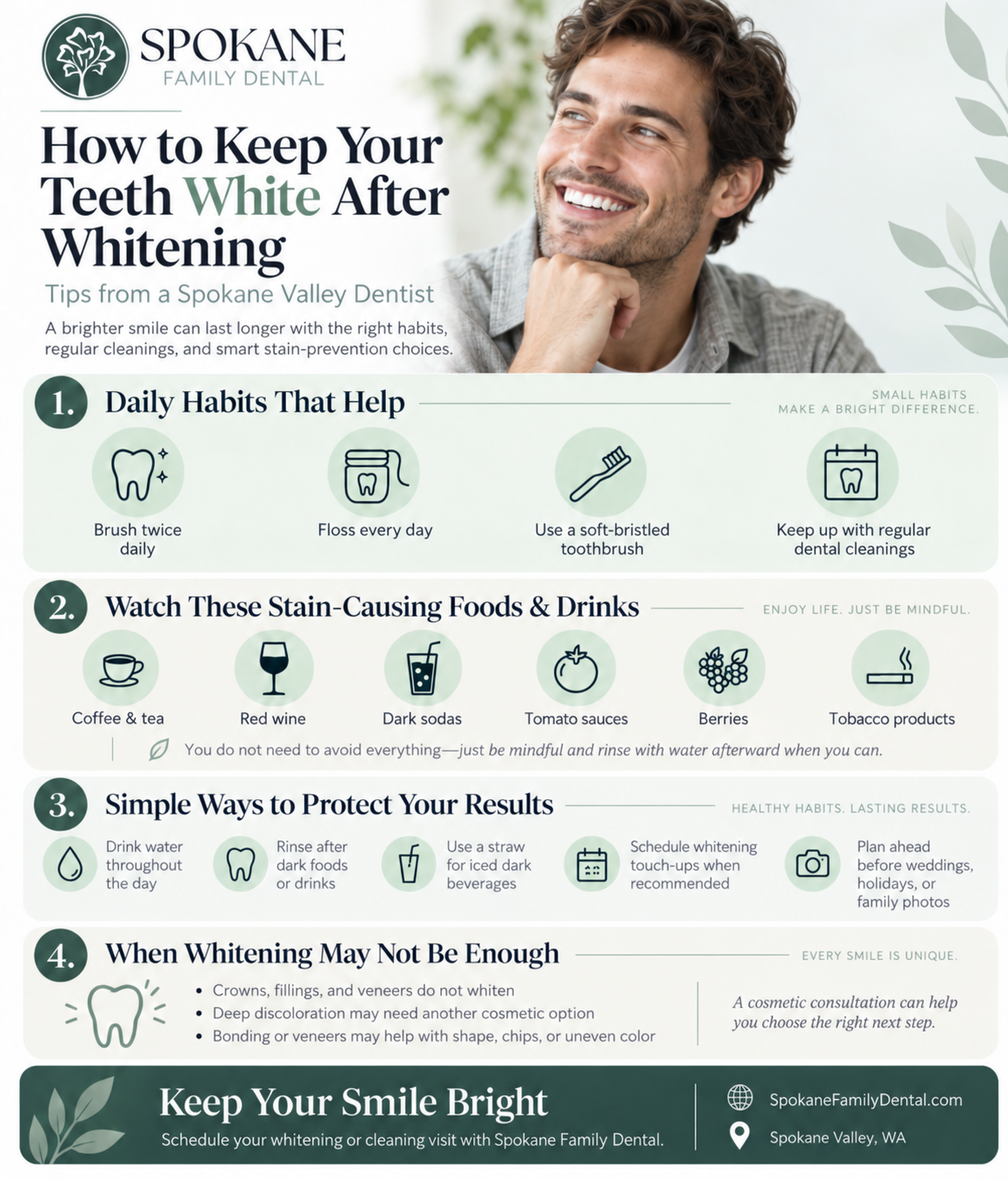
Why Teeth Can Stain Again After Whitening
Teeth naturally come into contact with foods, drinks, and habits that can cause discoloration over time. Whitening helps lift stains and brighten the teeth, but it does not make your teeth stain-proof.
Your enamel has tiny pores that can absorb pigments from dark-colored foods and drinks. Over time, these pigments can cause teeth to look yellow, dull, or darker than they did immediately after whitening.
Staining can also be affected by:
Coffee and tea
Red wine
Soda and sports drinks
Tomato-based sauces
Berries
Curry and deeply colored spices
Tobacco use
Inconsistent brushing and flossing
Plaque and tartar buildup
Natural aging
This does not mean you need to avoid everything you enjoy. It simply means that small daily choices can help your whitening results last longer.
Start With a Strong Daily Oral Care Routine
The best way to protect a brighter smile is to stay consistent with daily oral hygiene.
Brush your teeth at least twice a day using a soft-bristled toothbrush. Gentle, thorough brushing helps remove plaque and surface stains before they build up. Brushing too aggressively can irritate your gums and may contribute to enamel wear, so focus on technique rather than pressure.
Flossing is just as important. Stains and plaque can collect between the teeth where a toothbrush cannot reach. Daily flossing helps keep these areas cleaner and supports healthier gums.
If you struggle to stay consistent, consider using an electric toothbrush or water flosser. These tools can be helpful for some patients, especially when paired with regular dental visits.
Schedule Regular Dental Cleanings
Even with excellent home care, plaque and tartar can still develop over time. Once tartar hardens on the teeth, it cannot be removed with brushing alone.
Routine dental cleanings help remove buildup, polish away some surface stains, and keep your smile feeling fresh. They also allow your dentist to monitor your oral health and identify concerns before they become larger problems.
If you want your whitening results to last, keeping up with dental cleaning and prevention in Spokane Valley is one of the most important steps you can take.
For many patients, cleanings every six months are recommended. Some patients may need more frequent visits depending on gum health, cavity risk, medical conditions, or the amount of stain and tartar buildup they tend to develop.
Be Strategic With Coffee, Tea, and Dark Drinks
Coffee and tea are two of the most common causes of tooth staining. Many Spokane and Spokane Valley patients enjoy their morning coffee, and you do not necessarily have to give it up completely. However, changing how you drink it can help reduce staining.
Consider these simple habits:
Drink coffee or tea in one sitting instead of sipping slowly for hours
Rinse with water afterward
Use a straw for iced coffee, tea, or dark beverages
Avoid brushing immediately after acidic drinks
Limit sugary creamers and syrups when possible
Red wine, cola, sports drinks, and dark juices can also contribute to staining. Drinking water alongside these beverages can help rinse your mouth and reduce the amount of pigment sitting on your teeth.
Watch the Foods That Can Stain Your Smile
A helpful rule is this: if a food can stain a white shirt, it may also stain your teeth over time.
Common stain-causing foods include berries, tomato sauce, soy sauce, balsamic vinegar, beets, curry, and dark-colored desserts. These foods do not need to be completely avoided, but it is wise to rinse your mouth with water afterward and maintain a consistent brushing routine.
Pairing stain-causing foods with crunchy fruits and vegetables can also help. Apples, celery, carrots, and similar foods can stimulate saliva and help naturally rinse the mouth.
Stay Hydrated Throughout the Day
Water is one of the simplest tools for protecting your smile.
Drinking water throughout the day helps rinse away food particles, acids, and stain-causing pigments. It also supports saliva production, which plays an important role in protecting your teeth and gums.
This is especially helpful after meals, snacks, coffee, or dark-colored drinks. If you cannot brush right away, a quick water rinse can still help reduce the amount of staining material left behind.
Avoid Tobacco Products
Tobacco is one of the fastest ways to discolor teeth after whitening. Smoking, vaping, chewing tobacco, and other tobacco products can cause yellow or brown staining that is difficult to remove with brushing alone.
Tobacco can also increase the risk of gum disease, bad breath, oral cancer, and delayed healing after dental treatment.
If keeping your teeth white is a priority, avoiding tobacco products is one of the most effective choices you can make for both your smile and your overall oral health.
Use Whitening Products Carefully
Some patients want to continue using whitening toothpaste, whitening strips, or other products after professional whitening. While some products can help maintain brightness, they should be used carefully.
Whitening toothpaste may help remove surface stains, but it does not typically change the deeper color of your teeth. Some products may also be abrasive if used too often, which can contribute to sensitivity or enamel wear.
Overusing whitening strips or gels can lead to tooth sensitivity and gum irritation. If you are unsure which products are safe for your smile, ask your dentist for recommendations.
A dentist-guided maintenance plan is often better than guessing which whitening products to use on your own.
Do Not Ignore Tooth Sensitivity
Some tooth sensitivity after whitening can be normal, especially in the first few days. However, sensitivity that lasts, worsens, or affects your daily comfort should be discussed with your dentist.
Sensitivity can be caused by whitening, enamel wear, gum recession, cavities, cracks, or other dental concerns. If you assume it is only from whitening, you may miss a problem that needs attention.
Spokane Family Dental can help evaluate sensitivity and recommend next steps based on your teeth, gums, and whitening history.
Know When Whitening Is Not Enough
Whitening is designed to improve the color of natural tooth enamel. It does not correct every cosmetic concern.
Teeth whitening will not change the color of crowns, veneers, fillings, or bonding. It also may not fully correct deep discoloration caused by trauma, medication, enamel defects, or older dental work.
If your smile goals include improving shape, spacing, chips, or uneven tooth color, you may benefit from additional cosmetic options. Dental bonding in Spokane Valley can help with small chips, gaps, and uneven edges, while porcelain veneers in Spokane Valley may be a better option for more comprehensive cosmetic changes.
A consultation for cosmetic dentistry in Spokane Valley can help you understand whether whitening alone is the right choice or if another treatment would better match your goals.
Plan Touch-Ups Before Important Events
If you have a wedding, family photos, holiday gathering, graduation, or professional event coming up, plan ahead.
Whitening touch-ups should not be left until the night before an important event. You may need time to manage sensitivity, brighten gradually, or complete a cleaning before whitening. Scheduling early gives your dental team time to recommend the right approach.
For patients in Spokane, Spokane Valley, Liberty Lake, Veradale, Millwood, and surrounding communities, professional whitening can be a great way to prepare for special moments with more confidence.
Keep Up With Your Dental Exams
A whiter smile is great, but a healthy smile matters most.
Routine dental exams allow your dentist to check for cavities, gum inflammation, enamel wear, cracked teeth, and other concerns that may affect your smile. These visits are also a good time to ask whether your current whitening routine is working well or needs adjustment.
If your teeth are staining more quickly than expected, your dentist can help identify possible causes and recommend a better maintenance plan.
Choosing Spokane Family Dental for Whitening Maintenance
Whitening your smile is only the beginning. Keeping your smile bright requires a combination of good home care, regular cleanings, smart habits, and personalized dental guidance.
Spokane Family Dental helps patients throughout Spokane Valley and the greater Spokane area maintain healthy, confident smiles. Whether you are interested in your first whitening treatment, need help maintaining your results, or want to explore other cosmetic dental options, our team can help you choose the right next step.
Schedule Teeth Whitening Care in Spokane Valley
If you want to brighten your smile or protect the results of a recent whitening treatment, Spokane Family Dental is here to help. Our team can evaluate your smile, discuss your goals, and recommend a whitening or maintenance plan that fits your needs.
Schedule an appointment with Spokane Family Dental to learn more about professional teeth whitening and cosmetic dental care in Spokane Valley.
Frequently Asked Questions
-
Whitening results vary from patient to patient. Your diet, oral hygiene, tobacco use, and dental cleaning schedule all affect how long your teeth stay bright. Many patients maintain results longer with regular cleanings, smart stain-prevention habits, and occasional touch-ups.
-
After whitening, it is smart to limit dark-colored foods and drinks such as coffee, tea, red wine, soda, berries, tomato sauce, and curry. You should also avoid tobacco products, which can quickly stain teeth.
-
Yes, but coffee can stain your teeth over time. To reduce staining, drink coffee in one sitting, rinse with water afterward, and keep up with regular dental cleanings. Iced coffee may be easier to drink through a straw to reduce contact with the front teeth.
-
Teeth may stain again because of coffee, tea, tobacco, plaque buildup, aging, enamel wear, or inconsistent home care. If your teeth are discoloring quickly, a dentist can help determine whether you need a cleaning, whitening touch-up, or another cosmetic option.
